


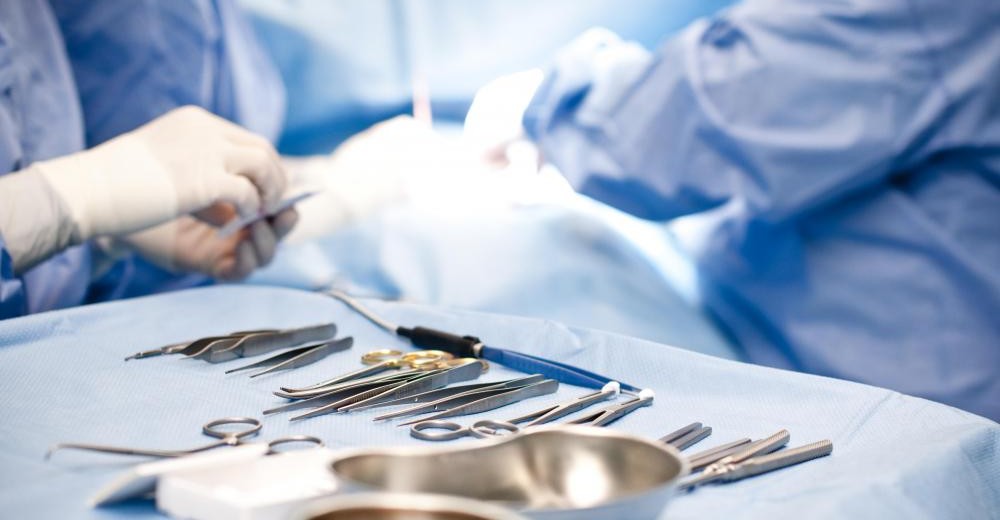
Colorectal surgery is a field of medicine that deals with diseases of the rectum, anus, and colon. We believe our Center offers you and your family the best option in the region for the following primary reasons:
- Liv Hospital Colorectal Surgery Centre is here to offer its international patients the best care, comfort and hope.
- We offer the most advanced surgery to treat colorectal diseases, some of which are not available at many other centres in the region.
- We provide true multidisciplinary care that brings together a team of specialists who meet regularly to discuss each patient's case.
- We realize that you may be coming from very far away for your health, and that is why we schedule your appointments in the most convenient way possible, in conjunction with your medical professionals in your home country as needed through our dedicated recovery specialist.
Multidisciplinary care at Liv Hospital
Your treatment and recovery after colorectal cancer surgery at Liv Hospital will be the centre of multidisciplinary care offered by our highly skilled team and experienced professionals in a variety of medical disciplines.
Liv Hospital's goal is to help our international patients recover faster with fewer complications so they can go home sooner. The treatment plan provided by these various health care providers will help you with your physical recovery, return to eating and drinking, and control your pain by administering the most non-narcotic medications possible.
Who is part of the multidisciplinary team at Liv Hospital?
Your surgeon guides the team by directing each step of your treatment. Here is a brief description of the role of the other team members:
Anaesthesiologist:
An anaesthesiologist is a doctor who is trained to relieve pain and care for the patient before, during and after surgery. The anesthesiologist will meet you before surgery to discuss the medications that will be used during surgery.
Recovery specialist:
The trained recovery specialist is there to assist foreign patients in coordinating visits, patient education, and referral to supportive services such as genetic evaluation, counselling, and integrative therapies. Your recovery specialist will help you in your language and will be sensitive to your cultural norms and values. Your recovery specialist will coordinate an assessment of your needs before you go home. He or she will talk with your doctors and nurses regularly to see if you need special medical supplies or care at home.
Specialist nurse of the Wound and Ostomy Care Clinic:
The clinic's specialist nurse will check if you have a colostomy or ileostomy inserted during surgery. He or she will help you about how to care for your ostomy at home and tell you how to order supplies.
Genetics Advisor:
A genetics advisor from Liv Hospital's Centre for Regenerative Medicine, Stem Cell Research and Application will help you and your family understand the genetic risks associated with colorectal cancer. A genetics advisor will work with your family to identify members who are at risk. If needed, he or she will discuss genetic testing, coordinated testing, interpretation of test results, and review any options for additional testing, monitoring, surgery, or testing that are available to family members.
Nurse:
Liv Hospital's trained nurses will work with your surgeon and other members of the medical team to provide comprehensive care and compassion. The nurse will care for you before, during and after surgery. He or she will guide you during your recovery and provide you with up-to-date training to meet your needs.
Dietitian:
Your surgeon may ask a dietitian to help you during your hospital stay. The dietitian will help you with your surgeon's dietary recommendations. The dietitian can educate you on how to develop good, healthy eating habits that will support long-term success.
Physiotherapists:
Your surgeon may prescribe physiotherapy as part of your recovery. A physiotherapist can help you with your strength and movement problems after surgery. He or she can also provide you with a personal home exercise program.
Wellness and support: support is available at California Pacific Medical Centre, details of which you can discuss with your recovery specialist or our International Office.
What is colorectal cancer surgery?
Colorectal cancer surgery is an operation that is used to treat cancer of the colon, also known as the rectum.
Colorectal cancer surgery can be performed by opening (cutting) the abdomen or by laparoscopy, which requires several small incisions on the abdomen. Laparoscopy is only possible for certain types of colorectal cancer surgery. Your surgeon will decide which method is most appropriate. Some laparoscopic surgeries may be replaced with open incision surgery.
With open incision surgery, your surgeon operates through an incision that is closed with staples or stitches. In laparoscopic surgery, your surgeon operates using several small incisions and uses instruments that are inserted through long, hollow tubes guided by a camera. Usually, an additional small incision is made to take out the part of the colon or rectum that has been removed (resected). This incision can be made anywhere on your abdomen. The location and number of access sites may vary by procedure and surgeon.
Colorectal cancer surgery includes different procedures: segmental colon resection, low anterior resection, or abdominal-perineal resection. The most common colorectal cancer surgery is low anterior resection (LAR). Low anterior resection is done for cancer in the upper two-thirds of the rectum and leaves the anal sphincter intact. This allows bowel control to be maintained. This operation is also possible in some patients with lower rectal tumours. If this approach is not possible in your case, your surgeon will discuss with you the possibility of a permanent colostomy. A specialized nurse from the Wound and Ostomy Care Clinic will meet with you and provide training and advice.